Barreto et al. (2024) – Biological Reviews
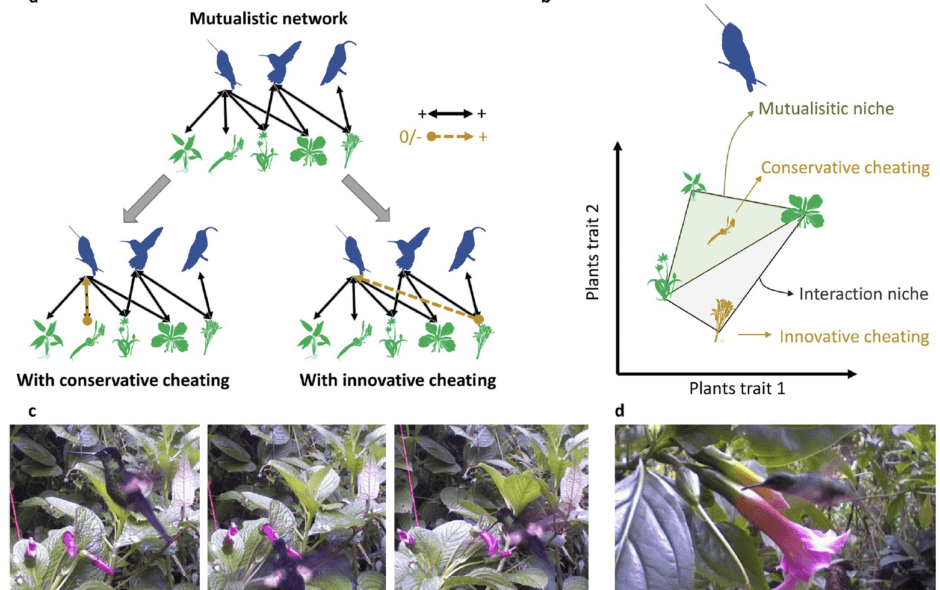
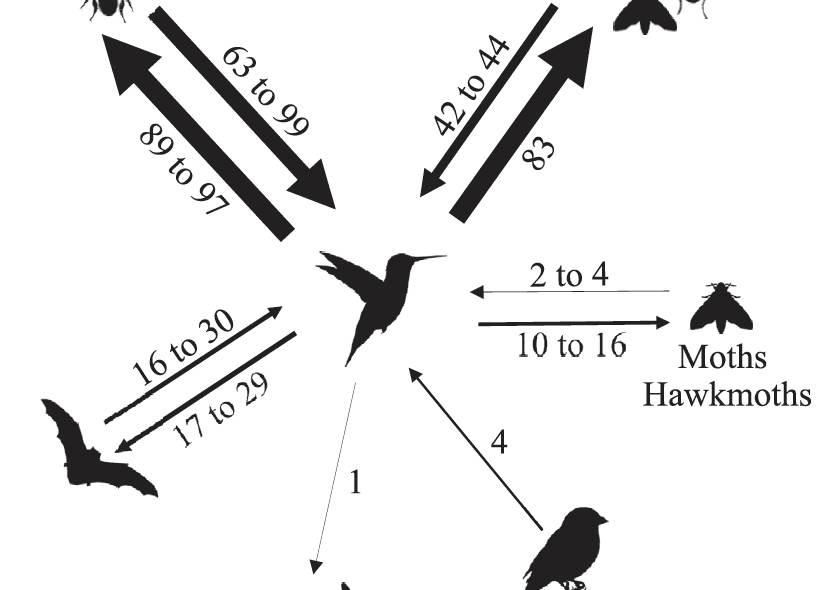
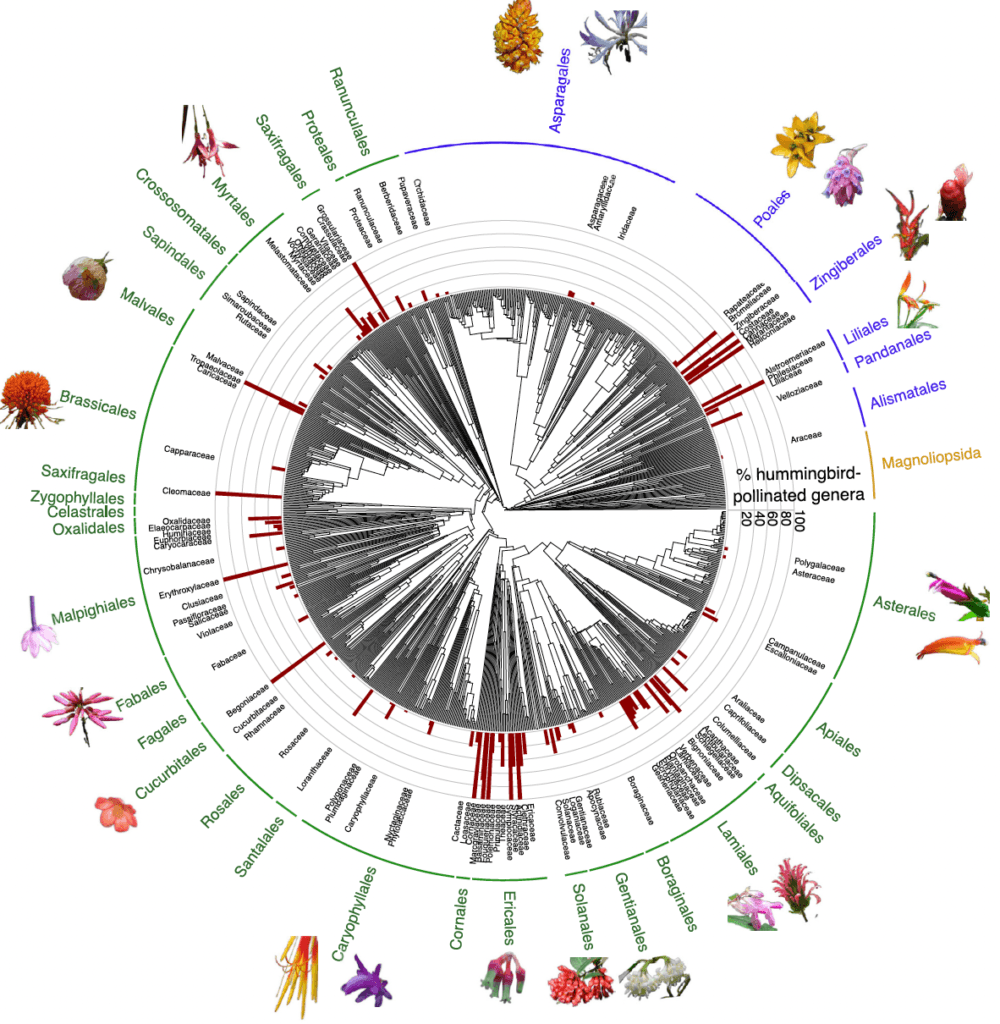
Plant–hummingbird interactions are considered a classic example of coevolution, a process in which mutually dependent species influence each other’s evolution. Plants depend on hummingbirds for pollination, whereas hummingbirds rely on nectar for food. As a step towards understanding coevolution, this review focuses on the macroevolutionary consequences of plant–hummingbird interactions, a relatively underexplored area in the current literature. We synthesize prior studies, illustrating the origins and dynamics of hummingbird pollination across different angiosperm clades previously pollinated by insects (mostly bees), bats, and passerine birds. In some cases, the crown age of hummingbirds pre-dates the plants they pollinate. In other cases, plant groups transitioned to hummingbird pollination early in the establishment of this bird group in the Americas, with the build-up of both diversities coinciding temporally, and hence suggesting co-diversification. Determining what triggers shifts to and away from hummingbird pollination remains a major open challenge. The impact of hummingbirds on plant diversification is complex, with many tropical plant lineages experiencing increased diversification after acquiring flowers that attract hummingbirds, and others experiencing no change or even a decrease in diversification rates. This mixed evidence suggests that other extrinsic or intrinsic factors, such as local climate and isolation, are important covariables driving the diversification of plants adapted to hummingbird pollination. To guide future studies, we discuss the mechanisms and contexts under which hummingbirds, as a clade and as individual species (e.g. traits, foraging behaviour, degree of specialization), could influence plant evolution. We conclude by commenting on how macroevolutionary signals of the mutualism could relate to coevolution, highlighting the unbalanced focus on the plant side of the interaction, and advocating for the use of species-level interaction data in macroevolutionary studies.
https://doi.org/10.1111/brv.13094