Macroecological and macroevolutionary patterns of plants with a (humming)bird pollination syndrome
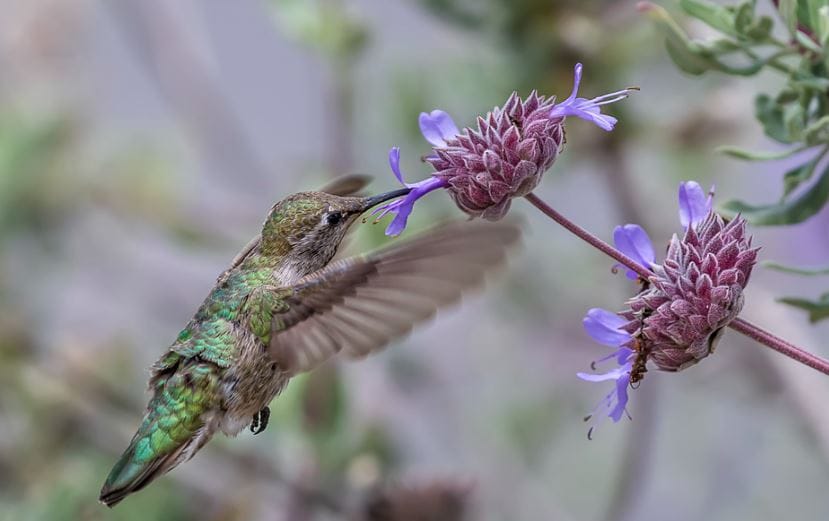
The match between plant and pollinator morphologies has fascinated naturalists for centuries and led to the proposition that these mutualistic partners influence each other’s evolution in a process called coevolution. Some angiosperm species convergently evolved brightly colored flowers, with long corollas and narrow openings, and copious amounts of dilute, sucrose-rich nectar that attract hummingbirds and prevent access from other pollinators. Likewise, hummingbirds have a variety of bill shapes and lengths that are believed to have evolved to fit the flowers.
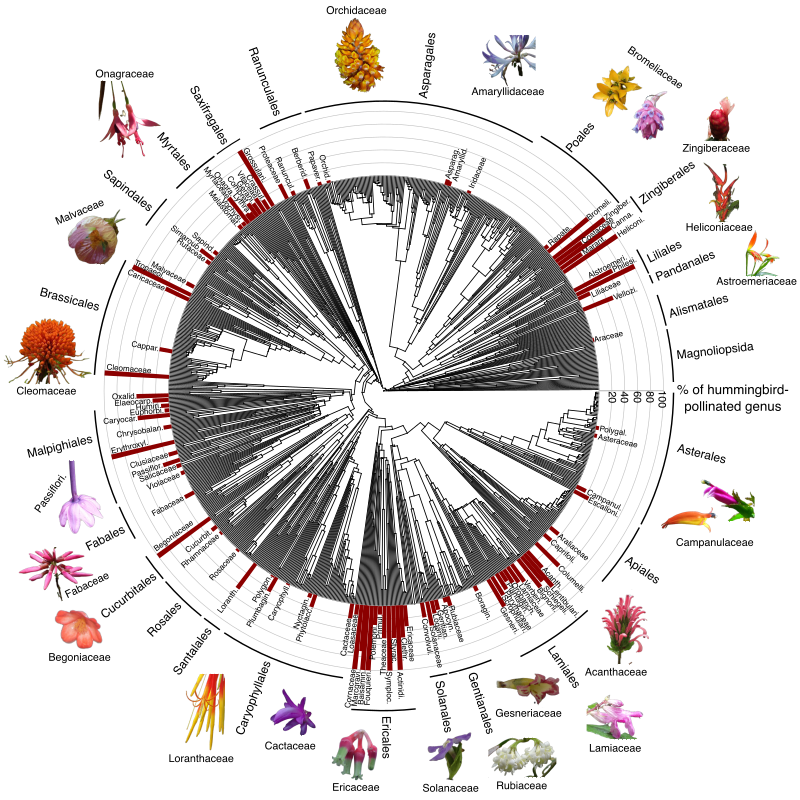
With a diverse team of researchers, we compiled a comprehensive, species-level list of angiosperms that either interact with hummingbirds or could potentially do so based on their floral traits. Interestingly, we found that around 33% of the plants with reported hummingbird interactions do not exhibit a classic (humming)bird pollination syndrome. Our final list includes approximately 10,000 plant species with a (humming)bird pollination syndrome, spanning 115 families and 822 genera.
The next phase of this project will explore the macroecological and macroevolutionary patterns of these plants — including mapping the proportion of hummingbird-adapted species across the Americas and investigating the tempo and mode of their evolutionary history. Stay tuned!

Species-specific ecological context
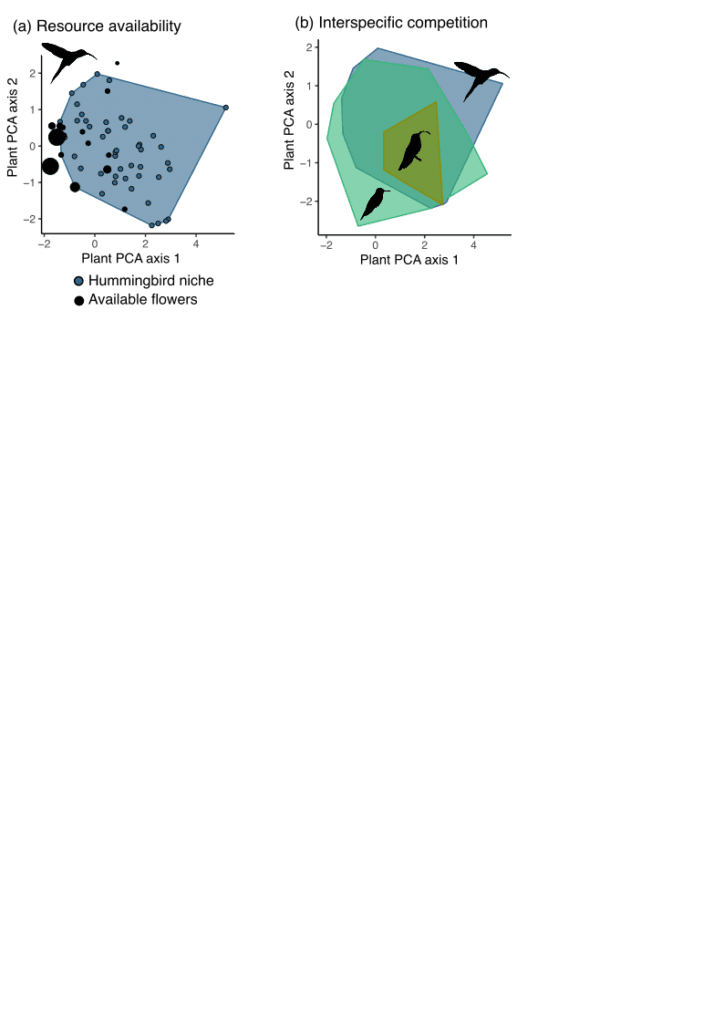
Mutualistic interactions, such as those between plants and pollinators, are essential to maintaining biodiversity and ecosystem function. Foraging choices are dynamic and influenced by morphological traits and by the ecological context, including resource availability and the occurrence of competitors. Yet, not all species experience the same ecological context, but studies rarely account for species-specific differences in ecological context, as resource accessibility and competition strength vary among pollinators depending on their traits. We are using plant-hummingbird interactions as a study case to examine how monthly measurements of specialization (how selectively a species forages relative to partner availability) are influenced by species traits and the ecological context. To quantify the ecological context experienced by each pollinator species, we consider the set of floral traits that each species can exploit-referred to as the interaction niche.
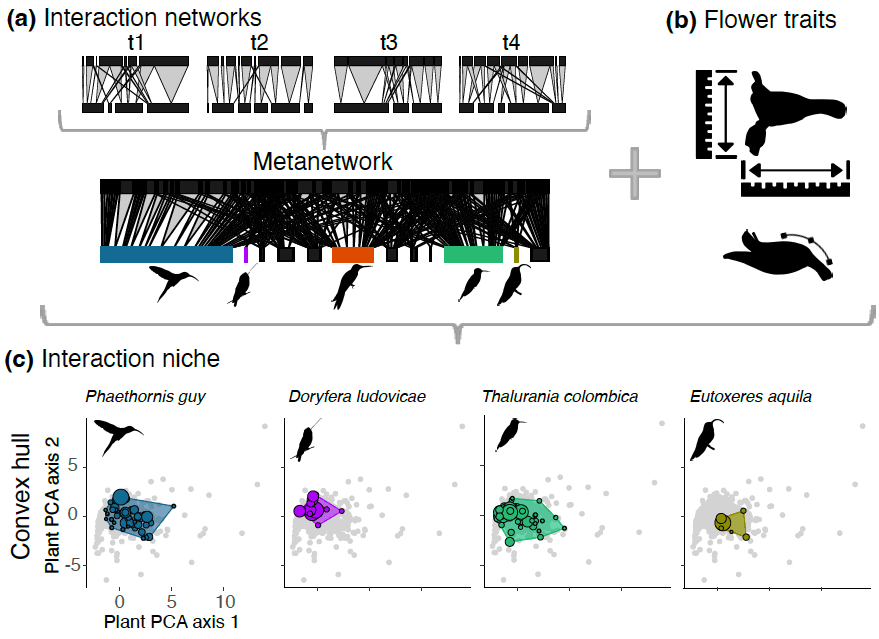
This trait-based approach to defining the interaction niche enables us to estimate both resource availability and interspecific competition for each pollinator species.